What’s the Difference Between Dermatology and a Medical Spa in Allen?
You’re standing in front of the bathroom mirror, studying your face a little too closely – as you do. Maybe it’s that patch of stubborn acne that’s been hanging around since your thirties (rude, honestly). Maybe it’s the sun spots you’ve been mentally cataloguing for months, or the fine lines around your eyes that seem to have multiplied since… when, exactly? Last winter? The year everything went sideways?
So you pull out your phone and start searching. And almost immediately, you’re faced with a choice that nobody really explains: do you book an appointment at a dermatology office, or do you walk into one of those sleek, gorgeous medical spas that seem to have popped up on every corner in Allen lately?
Here’s the thing – and this is what most people don’t realize until they’ve already made an appointment – these are not the same thing. Not even close. They overlap in interesting ways, sure, but walking into the wrong one for your particular concern is a little like going to a mechanic because your knee hurts. The setting might feel vaguely medical. The person helping you is probably very competent. But you’re not quite in the right place.
And it matters. It really does.
Not because one is inherently better than the other – that’s the wrong way to think about it entirely. But because what you’re dealing with should determine where you go. The frustrating truth is that most people choose based on aesthetics (the spa looks nicer, or the dermatology office was covered by insurance) rather than based on what actually makes sense for their specific situation. Then they wonder why they’re not getting the results they hoped for, or why something that felt like a cosmetic issue turned out to be something that needed real medical attention.
Allen has genuinely excellent options in both categories, which is wonderful – but it also means the decision is yours to make, and you deserve to make it with actual information.
So let’s talk about what you’ll actually find in each place. What kinds of professionals are behind those front desks, and what their training really means for you. We’ll get into the treatments – which ones you can only access through a licensed dermatologist, which ones are perfectly suited for a medical spa setting, and where the gray zone lives (because there absolutely is one).
We’ll also talk about the stuff nobody mentions in the brochures. Like when a “cosmetic” concern is actually a medical one in disguise. That mole you’ve been assuming is just a mole. The redness you’ve been treating as sensitivity but might be rosacea. The hair thinning you’ve been attributing to stress that might have a diagnosable cause. These things happen more than you’d think, and they’re exactly the reason knowing the difference between these two types of providers can genuinely affect your health – not just your appearance.
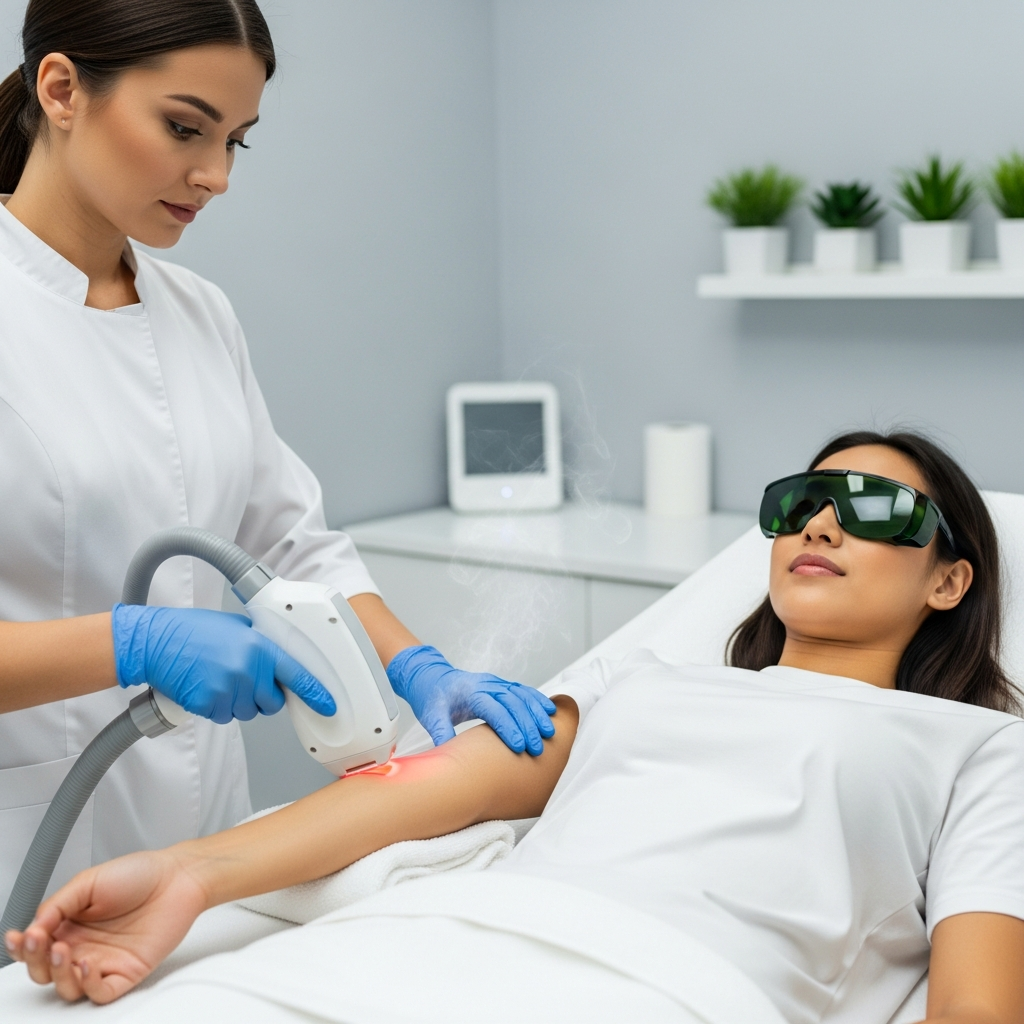
On the flip side, we’ll also talk about why a medical spa might actually be the smarter choice for certain goals. If you’re looking for Botox, laser hair removal, or a really excellent chemical peel in a relaxing environment with experienced aestheticians, you don’t necessarily need to be sitting in a clinical dermatology office. That’s valuable to know too. Nobody wants to overcomplicate something simple, or feel like they need a referral just to treat themselves.
Actually, one more thing worth mentioning before we get into all of it – the rules around medical spas in Texas are specific, and Allen providers operate within that framework. Understanding even a little bit about how these places are regulated will help you ask better questions and feel more confident wherever you end up going.
By the time you’re done reading, you’ll know exactly which kind of provider to call first based on what’s actually going on with your skin. You’ll know what questions to ask. You’ll know what red flags to watch for, and what realistic expectations look like on both sides.
No more standing at that bathroom mirror, phone in hand, just hoping you’re making the right call.
The Two Worlds of Skin Care (And Why They’re Easier to Mix Up Than You’d Think)
Here’s the thing – most people assume that anything involving lasers, injections, or medical-grade treatments automatically falls under “dermatology.” And honestly? That assumption makes total sense. But the reality is a little more nuanced, and once you understand how these two worlds actually work, choosing between them gets a lot easier.
Think of it this way. A dermatologist is like a mechanic who specializes in diagnosing what’s *wrong* with your car – identifying the source of that weird noise, figuring out if something structural is damaged, prescribing the right fix. A medical spa is more like a high-end detailing shop that also does some performance upgrades. They’re both working on the same car. They just have different primary focuses.
What Dermatology Actually Covers
Dermatology is a medical specialty – and that word “medical” is doing a lot of heavy lifting there. Dermatologists spend years in medical school, then complete residency training specifically focused on diagnosing and treating conditions of the skin, hair, and nails. We’re talking eczema, psoriasis, skin cancer screenings, suspicious moles, rosacea, chronic acne that won’t quit no matter what you’ve tried…
They can prescribe medications. They perform biopsies. If something looks wrong – really wrong – a dermatologist is the person you want in your corner. They’re also the ones who can tell you whether that spot on your shoulder is just a weird freckle or something that needs immediate attention. That diagnostic piece is honestly the core of what separates them from everything else.
In Allen and across Texas, dermatologists are licensed physicians – either MDs or DOs – which means they operate under a completely different regulatory and licensing framework than most aesthetic providers.
So What Exactly Is a Medical Spa?
This is where it gets a little confusing, and that’s fair. A medical spa – sometimes called a med spa or medispa – sits in this interesting middle ground between a traditional day spa and a medical clinic. It’s not quite one, not quite the other. The treatments are more clinical and results-driven than what you’d find at a regular spa, but the atmosphere tends to be more relaxed and wellness-focused than a doctor’s office.
Here in Texas, medical spas are required to operate under the supervision of a licensed physician – usually a medical director – even if that physician isn’t physically present for every single appointment. The treatments themselves are often performed by registered nurses, nurse practitioners, or licensed aestheticians, depending on what’s being done.
Actually, that physician oversight piece surprises a lot of people. Many assume med spas are essentially unregulated beauty businesses. In reality, there’s a real medical infrastructure behind reputable ones, even if you never see the doctor directly.
Where the Overlap Happens
Here’s the genuinely counterintuitive part – some treatments exist in *both* worlds. Botox, for example, is administered at dermatology offices and medical spas alike. Same with many laser treatments, chemical peels, and filler injections. So it’s not that one place offers “medical” treatments and the other offers “beauty” treatments. The distinction is more about why you’re going and what you need.
Are you there because something is wrong? Because you have a diagnosis, a prescription, or a condition that requires medical management? Dermatology. Are you there because you want to look and feel your best, address visible signs of aging, or get a treatment that’s a step up from anything you’d find at a regular spa? Med spa might be exactly right.
The Weight Loss Connection
You might be wondering what any of this has to do with a medical weight loss clinic. More than you’d expect, actually. Significant weight changes – whether from loss or gain – affect your skin in real, visible ways. Collagen levels shift. Skin elasticity becomes a genuine concern. Treatments like body contouring, skin tightening, and even certain injections become relevant parts of the bigger picture.
That’s why understanding the difference between these two types of providers matters so much when you’re thinking about your overall health and appearance goals. They can complement each other beautifully – or you can end up going to the wrong place for the wrong thing and feel frustrated when results don’t match expectations.
Knowing which door to walk through? That’s half the battle.
How to Actually Figure Out Where to Go
Here’s the thing most people don’t realize: the decision isn’t really about “dermatologist vs. med spa” as categories. It’s about what you’re trying to fix and how serious the stakes are. So before you book anything, get specific with yourself. Is this a new spot that showed up last month? A mole that’s changed shape? Or is this more like, “I’ve had these fine lines forever and I finally want to do something about them”? Those three scenarios lead you to three very different doors.
A good rule of thumb – and this is one worth writing down – is to ask yourself whether you’d want a physician in the room if something went wrong. For anything involving a diagnosis, a suspicious lesion, or skin that’s actively inflamed or infected, the answer is yes. That’s your dermatologist. For maintenance, enhancement, and cosmetic improvement of otherwise healthy skin? A reputable med spa in Allen can absolutely deliver.
What to Look For Before You Book a Med Spa
Not all med spas are created equal, and honestly, this is where people get burned (sometimes literally, if the wrong laser settings are used). Here’s what actually matters
Ask who owns the practice and who supervises treatments. In Texas, med spa procedures need to be performed under the supervision of a licensed physician. That physician doesn’t have to be standing in the room every second, but they should be accessible and medically responsible. If a med spa can’t clearly answer who their medical director is, walk away.
Look at the injector’s credentials specifically. For Botox, fillers, or any injectables, you want someone who’s – at minimum – a registered nurse or nurse practitioner with specific aesthetic training. Ideally a physician or physician assistant. Ask how long they’ve been doing this. A newly licensed nurse with three months of injectable experience is a very different thing than an NP who’s been doing aesthetics for eight years.
Check whether they do consultations first. A good med spa will sit down with you, look at your skin, and talk about realistic outcomes before they ever pick up a syringe. If someone’s ready to start a treatment on your first visit without any real conversation… that’s a flag.
Getting the Most Out of a Dermatology Appointment
Dermatology appointments can feel rushed – you know how it is, you wait forever and then the doctor’s in and out in twelve minutes. So come prepared.
Take photos of whatever you’re concerned about, especially if it changes over time. Show up with your concerns written down so you don’t forget something important when you’re in the room. And be honest about your full skin history: previous treatments, skincare products you’re using, any family history of skin cancer. Dermatologists are piecing together a puzzle, and you have pieces they need.
If your concern is both medical *and* cosmetic – say, you have rosacea that you also want to address aesthetically – mention both. Some dermatology practices offer cosmetic services, and your provider might be able to address more than you think. Or they might refer you out. Either way, ask.
The Smart Approach Is Usually Both
Here’s what the most skin-savvy people in Allen actually do: they have a dermatologist they see once a year for a full skin check, and they have a med spa relationship for their regular maintenance. It’s not either/or. Think of your dermatologist like your primary care doctor for your skin – you want that baseline, that medical oversight, that someone who’s looking at the whole picture. Your med spa is more like your gym membership. Consistent, results-focused, part of your regular routine.
If you’ve never had a professional skin check and you’re over 30, honestly, start there. Get the baseline. Know what you’re working with medically. Then you can make cosmetic decisions from a much more informed place – and your med spa provider will actually appreciate that you have that information.
One Last Thing Worth Knowing
Allen has grown a lot, and with that growth has come a real mix of quality in both categories. Don’t just go with whoever’s cheapest or whoever’s closest. Read reviews that mention specific providers by name. Ask friends who actually have good skin where they go. Word of mouth in a community like Allen is often more useful than any Google search.
When Your Skin Concern Falls Into a Gray Zone
Here’s something nobody tells you: a lot of skin concerns don’t fit neatly into a “dermatology problem” or “medical spa treatment” box. You’ve got something going on with your skin, and you genuinely can’t tell if it’s a medical issue that needs a diagnosis or a cosmetic concern that needs a good treatment plan. That confusion is completely normal – and honestly, the overlap between these two worlds is real.
Melasma is a perfect example. It’s technically a medical condition, but it’s also treated routinely at medical spas with things like chemical peels and laser treatments. So where do you go first? A reasonable starting point: if you’ve never had it evaluated, see a dermatologist. Once you have a diagnosis and a clear picture of what you’re dealing with, a medical spa might handle the ongoing maintenance beautifully. Think of it as getting your map before you start driving.
The Insurance Question Nobody Wants to Ask
Let’s be real – cost matters. And the insurance situation around skin care is genuinely confusing and, frankly, a little frustrating.
Dermatology visits for medical conditions – think suspicious moles, eczema flare-ups, diagnosed skin disorders – are typically covered by insurance. But the moment something gets classified as “cosmetic,” you’re paying out of pocket. And here’s the tricky part: sometimes the exact same treatment can be coded differently depending on the context. A laser procedure for rosacea might be covered when performed by a dermatologist treating a medical condition, but not when you walk into a med spa requesting the same thing for general redness you find bothersome.
The honest solution? Call your insurance company *before* you book anything. Ask specifically whether the procedure and the provider type are covered. It’s a tedious phone call, but it can save you hundreds of dollars in surprises.
Finding Providers You Can Actually Trust in Allen
Allen has no shortage of options – which sounds great until you’re standing at your computer at 11pm trying to figure out if a particular medical spa is legitimate or just really good at Instagram. The credentials question is where a lot of people get tripped up, and understandably so.
Not all medical spas are created equal. Some are overseen by board-certified physicians who are genuinely involved in patient care. Others… less so. Look for transparency about who’s supervising, what qualifications the injectors and aestheticians hold, and whether there’s a physician available – not just on paper, but actually accessible when questions come up. If a website is vague about who’s running the show medically, that’s worth paying attention to.
For dermatology, the credential to look for is board certification through the American Board of Dermatology. That’s not a small thing – it represents years of specialized training beyond medical school.
What to Do When You’ve Already Had a Bad Experience
Maybe you tried something and it didn’t go the way you hoped. A treatment that didn’t work, or worse, caused irritation or an unexpected reaction. This happens, and it’s one of the more uncomfortable realities of the aesthetics world.
First – don’t panic, but don’t ignore it either. A reaction that’s worsening, spreading, or involves significant pain needs prompt medical attention, full stop. Go to a dermatologist or urgent care. Bring photos if you can, and write down exactly what was done, what products were used, and when symptoms started. That information is genuinely useful.
For treatments that just… didn’t deliver results? That conversation belongs back with the provider who treated you. A reputable medical spa will want to address this. If you’re met with indifference, that tells you something important about where you chose to go.
The “I Don’t Know Where to Start” Problem
This is probably the most common challenge of all. You know something needs attention, but you’re not sure if you need a doctor or an aesthetician, a peel or a prescription, or whether you’re overthinking a completely minor thing.
Here’s a straightforward rule of thumb: if there’s any question about whether something is a medical issue – start with a dermatologist. You can always work your way toward cosmetic treatments once you have the clinical piece sorted. Going the other direction, realizing mid-treatment that you actually needed a medical evaluation first, is a much harder position to be in.
When in doubt, get the medical opinion first. The cosmetic options will still be there.
What to Actually Expect (And When to Expect It)
Here’s the thing nobody really tells you upfront: most aesthetic treatments – whether you got them at a dermatology office or a medical spa – don’t deliver instant, dramatic results. Well, some do. Botox kicks in within a few days and you’ll notice it within two weeks. But a lot of the treatments people are curious about? They take time. Real time. And managing that expectation going in makes the whole experience so much better.
Fillers give you immediate volume, sure, but the swelling can make you look… weird for a few days before things settle. Laser treatments often look worse before they look better – redness, some peeling, maybe a little “did I make a mistake?” panic around day three. That’s normal. That’s the process working.
If you’re starting a medical weight loss program through a clinic, understand that the first month is mostly about adjustment. Your body is figuring out what’s happening. You might lose some weight, you might feel different, you might have some side effects to work through with your provider. Month two and three are usually where people start seeing patterns they can actually build on.
Timelines That Are Actually Realistic
For skin concerns – whether you’re treating hyperpigmentation, acne scarring, or sun damage – most providers will tell you to plan for a series of treatments rather than one. Think three to six sessions, spaced several weeks apart. The results build on each other. Going in expecting a single chemical peel to erase years of sun damage is a recipe for disappointment, and honestly, any good provider is going to level with you about that.
Laser hair removal? Most people need six to eight sessions minimum, and even then, some hair will come back over time (especially with hormonal changes). It’s reduction, not necessarily permanent elimination for everyone. Worth knowing before you budget.
Medical weight loss timelines are genuinely individual – which sounds like a cop-out but it’s just biology. Someone on GLP-1 medications might see significant changes in three months. Someone else, same medication, same dose, might take six months to really hit their stride. Factors like your starting weight, metabolic health, sleep, stress… they all play a role. A good clinic tracks progress carefully and adjusts accordingly rather than just leaving you on a protocol that isn’t working.
What “Normal” Looks Like After Treatment
Redness after a laser treatment? Normal. A little bruising after filler? Completely normal – and more common than most people realize. Feeling a bit swollen, tender, or just *off* for a day or two after certain procedures? Also normal. Your provider should walk you through what to expect at your specific appointment, but don’t spiral if you look in the mirror the next morning and feel like you made a terrible decision. Give it time.
What’s *not* normal – and worth calling about – is significant pain, unusual swelling that gets worse instead of better, signs of infection, or anything that just feels wrong to you. Trust your gut. Providers would rather you call and have it be nothing than have you wait on something that needed attention sooner.
Your Next Steps if You’re Considering Either Option
Start with a consultation. Seriously, don’t skip this step. Most dermatology offices and reputable medical spas in Allen offer them, and it’s your chance to ask questions without committing to anything. Come with your actual concerns written down – it’s easy to forget things when you’re in the moment.
Think about what problem you’re actually trying to solve. Is it a skin concern that’s been bothering you for years? A medical condition that hasn’t responded to over-the-counter stuff? A weight that’s affecting your health and energy? The answer shapes where you should go first.
And – this is important – don’t let anyone pressure you into a package before you’ve had a chance to think about it. A good provider understands that. They want you to be a well-informed patient, not just a transaction.
Ask about credentials. Ask about the physician oversight. Ask how they handle complications if something unexpected happens. A place that welcomes those questions is a place worth trusting.
The right path looks different for everyone. But taking a little time to understand your options – rather than just booking whatever is trendy right now – puts you so much further ahead.
So here’s the thing – figuring out where to go for your skin concerns doesn’t have to feel like navigating a maze. Once you understand what each setting actually offers, it becomes a lot clearer. Dermatologists are your go-to for anything medical – the stuff that needs a diagnosis, prescription treatments, or a trained eye watching for something serious. Medical spas? They’re the sweet spot where clinical expertise meets the kind of self-care that leaves you walking out feeling genuinely good about yourself.
And honestly, a lot of people find they benefit from both over time. Maybe you’re getting a suspicious mole checked at your dermatologist’s office while also treating yourself to body contouring or skin rejuvenation at a med spa. There’s no rule that says it has to be one or the other.
The Bigger Picture Here
What really matters – more than knowing all the technical differences – is that you feel empowered to ask for help. So many people sit with skin concerns or weight struggles or confidence issues for *way* longer than they should, mostly because they’re not sure where to turn. They Google for a while, feel overwhelmed, and then just… do nothing. Sound familiar?
You deserve better than that.
Whether you’re dealing with something that’s been quietly bothering you for years, or you’ve just decided that this is the season you finally take your wellness seriously, someone is ready to help you figure out the right next step. That’s not a sales pitch – that’s just true.
What This Looks Like in Allen
The good news is that here in Allen, you’ve got real options. Medical weight loss clinics and medical spas staffed by qualified providers can offer you so much more than a cookie-cutter experience. These aren’t places that just hand you a pamphlet and send you on your way. When you work with a team that combines medical oversight with genuine care for how you feel in your own skin, the whole experience is different. It feels like being *seen*.
And that’s worth a lot.
A Little Encouragement Before You Go
If you’ve been reading through all of this and one thought keeps coming back – whether it’s about your weight, your skin, a treatment you’ve been curious about, or just a general sense that you’d like to feel better – that thought is worth listening to. You don’t need to have everything figured out before you reach out. You don’t need to know exactly what you want or which treatment is right for you.
That’s literally what the conversation is for.
Our team at [Clinic Name] is here to answer your questions without pressure, without judgment, and without making you feel like you have to commit to anything before you’re ready. We’d love to hear what’s going on for you and help you figure out what actually makes sense – even if that means pointing you in a different direction.
Reach out when you’re ready. It can be a quick question, a curious email, or a full consultation – whatever feels right. We’re not going anywhere, and neither is our commitment to helping people in this community feel genuinely well.
You’ve got people in your corner. Don’t be afraid to let them help.