Allen Med Spa: What to Expect During Consultation
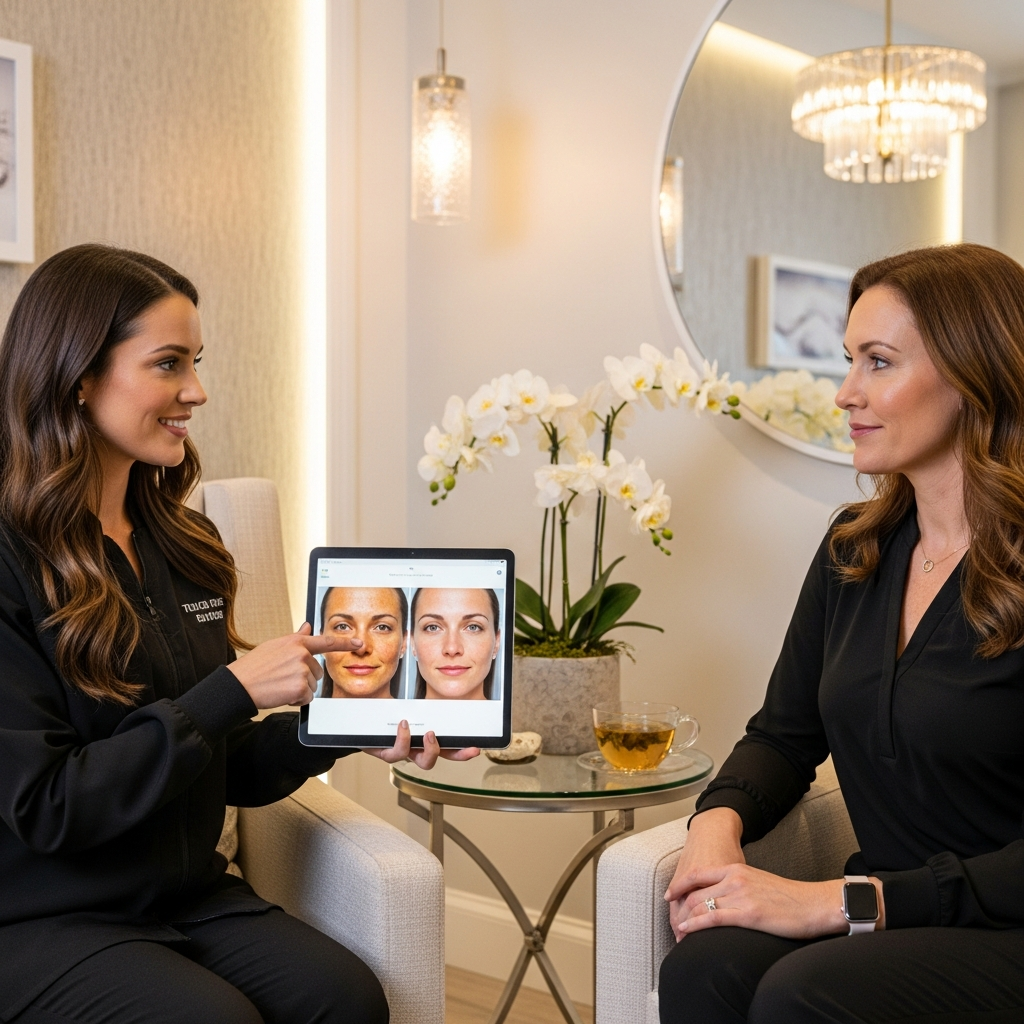
You’ve finally done it. You’ve typed the words into the search bar, clicked around a few websites, maybe even closed the tab twice before coming back. Something keeps pulling you toward making this appointment – but something else keeps hesitating.
Sound familiar?
That little back-and-forth? It’s completely normal. And honestly, for most people, the thing that’s holding them back isn’t the treatments themselves or even the cost. It’s the not knowing. What actually *happens* at one of these consultations? Will someone take one look at you and start rattling off a list of everything that needs “fixing”? Will you feel pressured? Judged? Like you accidentally walked into a conversation you’re not ready to have?
Those are real fears, and nobody talks about them enough.
Here’s what we’ve noticed after working with hundreds of patients over the years – the consultation is almost always the moment everything changes. Not because someone waves a magic wand, but because you finally get to sit across from a real person who listens, asks the right questions, and helps you understand what’s actually possible for *your* body. Not a generic before-and-after photo body. Yours.
Why the Consultation Matters More Than You Think
There’s this temptation to treat the consultation like it’s just… paperwork before the real thing starts. A formality. The thing you have to sit through before you get to the good part.
But that’s a little bit like thinking the foundation of a house doesn’t matter because you can’t see it once everything’s built.
At Allen Med Spa, the consultation *is* the real thing – or at least, it’s where everything important begins. It’s where your health history gets reviewed carefully (and we mean carefully, not just a quick glance at a form), where your goals get unpacked beyond the surface level, and where a personalized plan starts to take shape that actually makes sense for your life. Not some template. Your life.
And look – if you’ve been burned before by a one-size-fits-all approach somewhere else, or you’ve tried things that didn’t stick, or you’ve just been quietly carrying around frustration about your weight for longer than you’d like to admit… this is the space where that story starts to shift.
What You’ll Actually Learn Here
This article is going to walk you through everything – and we mean everything – about what to expect when you come in for your consultation at Allen Med Spa. We’re not going to give you the glossy brochure version. We’re going to tell you what actually happens, step by step, so you can walk through that door feeling prepared instead of anxious.
We’ll cover how to get ready before your appointment, what the intake process looks like, the kind of questions your provider will ask (and why they ask them – which actually makes a lot more sense once you understand the reasoning), and how the whole conversation gets shaped around *you* rather than a standard script.
We’ll also talk about what happens after the consultation – because that’s a part nobody ever explains upfront, and it’s honestly one of the most important pieces of the puzzle.
Actually, that reminds me of something worth saying right now: there are no dumb questions in that room. Bring the list on your phone. Bring your skepticism. Bring the thing you’ve been embarrassed to say out loud. The consultation only works if you show up as yourself, not as the version of yourself you think you’re supposed to be.
You Deserve to Feel Informed
Medical weight loss isn’t just about a number on a scale – you probably already know that, somewhere in the back of your mind. It’s about energy, and confidence, and feeling like your body is working *with* you instead of against you for once. It’s about sustainable change that actually fits into your real life, not some ideal version of it.
And it all starts with one conversation.
So whether you’re walking in next week or you’re still in the “maybe someday” phase… stick with us. By the time you finish reading this, that next step is going to feel a whole lot less scary.
Why the Consultation Comes First (And Why That Actually Matters)
Here’s something that surprises a lot of people: the consultation isn’t just a formality you sit through before getting to “the real stuff.” It *is* the real stuff. Think of it less like a waiting room experience and more like the planning session before a big renovation – you wouldn’t want a contractor just showing up and knocking down walls without first understanding your vision, your budget, and whether those walls are load-bearing, right?
The consultation is where everything gets sorted out. Your goals, your health history, your realistic timeline – it all comes together here, and honestly, what gets decided in that first hour shapes everything that follows.
Your Body Isn’t a Template
This is one of those things that sounds obvious until you really think about it. Two people can walk in with nearly identical goals and end up with completely different treatment plans – and both of those plans can be exactly right.
That’s because medical weight loss is genuinely personalized medicine. Things like your metabolic rate, how your body stores fat, your hormonal profile, existing health conditions, and even medications you’re already taking all influence which approaches will actually work for *you*. A provider can’t know any of that by looking at you. They find it out by talking to you, reviewing your history, and sometimes running labs.
It’s a little like how two cars that look the same on the outside can have completely different engines. The plan has to fit what’s under the hood.
What “Medical” Weight Loss Actually Means
Okay, this part confuses people sometimes – understandably so. Medical weight loss doesn’t necessarily mean surgery. It means your care is supervised and guided by licensed medical professionals, which opens up options that aren’t available over the counter or through a generic app.
We’re talking about things like prescription medications (including newer GLP-1 receptor agonists that have genuinely changed the conversation around weight management), hormone evaluation, metabolic assessments, and ongoing clinical oversight. The “medical” part means someone is actually watching, adjusting, and accountable for your care – not just handing you a pamphlet and wishing you luck.
It also means there are safety guardrails. Not every treatment is right for every person, and a good consultation is partly about figuring out what to *avoid* just as much as what to pursue.
The Whole-Picture Approach
Here’s something that’s a little counterintuitive at first: the consultation will probably cover things that don’t seem directly related to weight at all. Sleep. Stress. Your relationship with food – not just what you eat, but how you feel about eating. Your activity level, sure, but also why you’ve been active or inactive.
That’s not filler. Those factors are genuinely tangled up with weight in ways that science keeps uncovering. Chronic stress, for instance, elevates cortisol – which actively encourages your body to hold onto fat, especially around the midsection. Poor sleep disrupts the hormones that regulate hunger. You can do everything “right” and still stall out if these pieces aren’t addressed.
A med spa with a real clinical foundation understands that weight isn’t a simple math problem. It’s a system. The consultation helps your provider see the whole system, not just one variable.
What You’re Actually Being Evaluated For
During the consultation, your provider is building a picture of you – your current health status, where you’re starting from, and what your body is likely to respond to. This might involve reviewing your medical history, discussing any previous weight loss attempts (what worked, what didn’t, and honestly, why), checking your vitals, and potentially recommending bloodwork if it hasn’t been done recently.
Actually, that last point is worth noting: some people come in already knowing their numbers from a recent physical. If you have recent labs, bring them. It saves time and gives your provider a head start.
None of this is about judgment. It’s data gathering. The more accurate the picture, the better the plan – and the less time you spend trying things that aren’t suited to how your particular body works.
The Trust Thing
One more thing that doesn’t always get said out loud: consultations go both ways. Yes, the provider is assessing you – but you’re also assessing them. Do they listen? Do they explain their reasoning? Do they make you feel like a person rather than a chart?
That relationship matters more than people expect. Weight loss is slow, sometimes frustrating work, and you need a team you actually trust.
Before You Even Walk Through the Door
Do yourself a favor and spend 20 minutes the night before your appointment actually thinking through your health history. Not just the big stuff – we’re talking the supplements you take, the irregular periods you mentioned once to your OB and then forgot about, the stress fracture from three years ago. Write it down. Seriously, grab your phone and make a note. Providers can only work with what you tell them, and the more complete your picture, the better your personalized plan is going to be.
Pull together any recent bloodwork too, even if it’s from your primary care doctor and feels unrelated. Thyroid panels, A1C, cholesterol – these all paint a picture that helps the team understand what’s actually going on with your metabolism. Don’t assume they already have it.
What to Actually Wear (This Matters More Than You Think)
Wear something comfortable that you can move in. You’ll likely have your weight and measurements taken, and fumbling with complicated zippers or shapewear at 9am is… not the vibe. Comfortable leggings and a simple top are genuinely your best bet. Skip the heavy makeup too – some consultations include a brief skin or body composition assessment, and you want the providers seeing the real you, not the filtered version.
Oh, and eat something beforehand. A light meal, nothing too heavy. Showing up starving affects your focus, your mood, and honestly, your body composition readings if they’re doing any kind of scan.
Questions Worth Asking (That Most People Don’t Think to Ask)
Most people come in with questions like “how fast will I lose weight?” which is understandable – but there are sharper questions that’ll actually help you make a better decision. Try these
– “What happens if the first approach isn’t working after a month?” – this tells you how flexible and responsive the program is – “Who do I contact between appointments if something feels off?” – because you want to know there’s a real person on the other end – “What does the maintenance phase look like?” – weight loss is one thing, keeping it off is the whole game – “Are there any medications or supplements I’m currently taking that might interact with what you’re recommending?”
That last one? People almost never ask it, but it matters enormously.
Be Honest – Like, Brutally Honest
This is not the moment to present your best self. Tell them about the wine you have most Friday nights. The stress eating when work gets intense. The fact that you’ve tried keto twice and both times made it three weeks before falling face-first into a bowl of pasta. None of this is shameful – it’s actually incredibly useful clinical information that shapes what kind of plan will actually stick for you specifically.
The providers at Allen Med Spa aren’t there to judge your habits. They’re there to build something that works around your real life, not some imaginary version of you who meal preps every Sunday and loves the gym.
Taking Notes During the Appointment
Bring something to write with, or be ready to take notes on your phone. When someone’s walking you through medication protocols, supplement schedules, dietary adjustments, and follow-up timelines all at once, it blurs together fast. You think you’ll remember – you won’t. Even just jotting down the key points means you leave with clarity instead of that foggy “wait, what did they say about the dosing?” feeling that hits you in the parking lot.
After the Consultation Ends
Don’t rush out. If something felt unclear or you thought of a follow-up question while they were talking, ask it before you leave. There’s no such thing as a dumb question in this setting.
Take a day or two before committing to a program if you need it – a good practice will never pressure you into a same-day decision. Use that time to look back at your notes, think about your schedule and whether the recommended approach realistically fits your life right now, and maybe ask a trusted friend or partner for their perspective.
The consultation is really just the beginning of a conversation. The more you put into that first appointment, the more you’ll walk away with something that actually works.
When Nerves Get in the Way of Honest Answers
Here’s something nobody really talks about: a lot of people walk into their first consultation and… freeze. You’ve been thinking about this appointment for weeks, maybe months. You have a mental list of everything you want to say. And then you’re sitting across from someone in a white coat and suddenly your mind goes completely blank.
It happens constantly. You’re not broken, you’re just human.
The fix is almost embarrassingly simple – write it down beforehand. Not a mental note. An actual list on your phone or a scrap of paper. Your biggest frustrations, the things you’ve already tried, the number on the scale that made you finally pick up the phone. When the words don’t come, you can literally hand that list over. No judgment. No fumbling around for the right way to say something.
The Weight of Being Completely Honest
This one’s trickier. There’s a real temptation to present your “best self” at a consultation – to underreport how much you’re eating, overreport how often you’re exercising, or skip mentioning that you’ve been on and off crash diets for fifteen years. You want to seem like a good candidate, like someone who deserves help.
But here’s the thing. The staff at Allen Med Spa genuinely cannot help you if they’re working from a sanitized version of your life. It’s like telling your mechanic the car makes a funny noise sometimes, when actually it makes a terrifying noise every single morning and you’ve been white-knuckling it for six months.
The consultation is not a performance. It’s a diagnostic conversation. The more accurate the information you give, the more precisely they can tailor a plan that actually works for your real life – not some idealized version of it. They’ve heard everything. Nothing you say is going to shock them.
Understanding What You’re Being Told
Medical consultations have a language problem. Providers sometimes slip into clinical shorthand without realizing it, and patients nod along even when they’re completely lost. Then you leave with a stack of paperwork and no real idea what happens next.
If something doesn’t make sense, ask. Then ask again if the second explanation is also confusing. Actually, a useful trick is to repeat back what you think you heard – “So you’re saying that this medication works by…?” – because it gives your provider a chance to catch any gaps before you walk out the door.
It’s also worth asking specifically: *what does success look like at 30 days? At 90 days?* Having concrete markers to watch for makes the whole thing feel less like wandering in the dark.
When the Plan Feels Overwhelming
Some people leave their consultation feeling energized. Others look at the recommended protocol and feel a low-grade panic settling in. Maybe it’s more involved than you expected. Maybe the dietary changes seem impossible given your schedule, your family, your budget.
Don’t just quietly abandon ship. That’s the worst possible response, even though it’s the most common one.
Go back. Call. Send a message through the portal. Whatever the communication channel is – use it. Medical weight loss plans are meant to be adjusted, not white-knuckled through. A good provider would much rather tweak your approach than watch you disappear because you were too embarrassed to say the plan wasn’t working.
The Plateau That Makes You Question Everything
You’re doing everything right. And then the scale stops moving. For days. Sometimes weeks. This is genuinely one of the hardest moments in any weight loss process, and it derails more people than almost anything else.
What’s important to know going in is that plateaus are physiological, not personal failures. Your body is genuinely adaptive – annoyingly, impressively adaptive. It will find ways to recalibrate. This is exactly when staying in contact with your care team matters most, because they can look at what’s happening and adjust the approach. Sometimes it’s a small tweak. Sometimes it’s identifying something else entirely going on.
The mistake is assuming silence is the only option when things get hard. It’s not. These people are on your team – and honestly, watching someone push through a plateau is one of the most satisfying parts of their job. Let them help you do it.
What Happens Right After Your Consultation
So you’ve had your consultation. You’ve talked through your goals, maybe gotten some bloodwork ordered, and now you’re sitting in your car wondering… what actually comes next? This is the part where a lot of people feel a little lost, honestly. The excitement of taking that first step can quickly turn into impatience – and that’s completely normal.
Here’s the honest truth: the first few weeks after your consultation are mostly about groundwork, not dramatic transformation. And we know that’s not what anyone wants to hear.
Your Treatment Plan Takes a Little Time to Come Together
Depending on what came up during your consultation, you might be waiting on lab results before your provider can finalize recommendations. That typically takes anywhere from a few days to about a week. If you’re starting on a medication like semaglutide or tirzepatide, there may also be prior authorization steps with your insurance – and that process can sometimes stretch to two weeks or more, just to set realistic expectations.
The waiting feels frustrating. We get it. But this isn’t the clinic dragging its feet – it’s the process working the way it’s supposed to, making sure your plan is actually built around *you* and not just a template.
The First Month Looks Different Than You’d Expect
A lot of people come in expecting to feel dramatically different within the first few weeks. Some do! But many don’t – and that doesn’t mean anything is wrong.
If you’re starting a GLP-1 medication, for example, the first four weeks are usually about tolerating the medication well and letting your body adjust. Doses typically start low on purpose. You might not notice much appetite change right away, and that’s by design. Pushing too fast too soon is how people end up with side effects that make them want to quit entirely.
Weight loss in this phase is often modest – maybe a few pounds, maybe less. That’s normal. The meaningful, sustained progress usually starts building in months two and three, once your dose has been adjusted and your body has found its rhythm.
Check-Ins Are Part of the Process (Not Optional)
Your follow-up appointments aren’t just a formality – they’re actually where a lot of the real work happens. Your provider will be looking at how you’re tolerating your treatment, whether your numbers are moving in the right direction, and whether anything needs to be adjusted. These check-ins are also your chance to be honest about what’s hard. Struggling with protein intake? Feeling sluggish? Having some nausea in the evenings? Say so. That’s exactly the kind of information that helps your provider fine-tune your plan.
Actually, that reminds me of something worth saying plainly: the people who tend to see the best results aren’t necessarily the ones who follow their plan perfectly. They’re the ones who stay in communication. Who show up to appointments even when the scale hasn’t moved. Who ask questions instead of quietly struggling.
What “Progress” Actually Looks Like
It’s worth having an honest conversation with yourself – and with your provider – about what success means over the next six to twelve months. Because the number on the scale is only part of the picture.
Blood pressure coming down. Energy improving. Sleep getting better. Clothes fitting differently before the scale shows much movement. These are real wins, and they tend to show up before the dramatic weight loss numbers do.
A reasonable, sustainable goal for most people in a medically supervised program is somewhere in the range of one to two pounds per week once the treatment is fully dialed in – though that varies quite a bit based on starting weight, metabolism, lifestyle, and the specific approach you and your provider agree on. Anyone promising you faster than that without knowing your full picture is probably overselling.
The Mindset Shift Nobody Talks About
Here’s something that catches a lot of people off guard: this process asks more of you than just following instructions. There’s a mental adjustment that happens – learning to trust a slower pace, breaking old habits around food and self-worth, figuring out what your body actually needs versus what stress or boredom is asking for.
Be patient with yourself in that. Really. This isn’t a sprint. It’s not even a marathon, actually – it’s more like changing the way you walk entirely. Slower to learn, but it sticks.
Your team at Allen Med Spa is in your corner for the long haul. Don’t hesitate to reach out between appointments if something feels off. That’s what they’re there for.
That first consultation – whether you’ve been thinking about it for months or finally just decided to go for it last Tuesday – is really the moment where everything starts to feel real. And honestly? That can bring up a mix of emotions. Excitement, maybe a little nervousness, possibly some of that quiet hope you’ve been carrying around for a while. All of that is completely normal.
What we want you to walk away knowing is this: you won’t be walking into a room where someone hands you a meal plan and sends you on your way. The whole point of that initial conversation is to actually *understand* you – your history, your health, your life, the stuff that’s worked before and the stuff that hasn’t. Because let’s be honest, if generic advice worked, you wouldn’t be looking for something better.
The team at Allen Med Spa genuinely approaches this differently. There’s no judgment about where you’re starting from. No raised eyebrows at your medical history. No clipboard full of shame. Just a real conversation with people who’ve helped a lot of patients navigate exactly what you’re navigating right now – and who understand that weight and wellness aren’t just about calories. They’re tangled up with hormones, stress, sleep, life circumstances… it’s complicated. And treating it like it isn’t would be doing you a disservice.
Actually, that reminds me of something patients say pretty often after that first appointment – that they finally felt *heard*. Not rushed. Not reduced to a number on a scale. That matters more than most people expect it to.
So what happens after the consultation? You’ll leave with clarity. A personalized plan that actually makes sense for your body and your goals. Maybe that’s medical weight loss support, maybe it’s a combination of approaches – whatever it is, it’ll be built around you, not a template. And the support doesn’t stop at the door when you leave. That’s kind of the whole point.
You Don’t Have to Have It All Figured Out
Maybe you’re still on the fence. Maybe you’re not totally sure what questions to even ask yet. That’s fine – genuinely. You don’t need to arrive with a perfectly prepared list or know exactly what you want. That’s what the consultation is *for*. You just have to show up, be honest, and let the conversation go from there.
If you’ve been waiting for a sign that it’s okay to ask for help, consider this it. Reaching out doesn’t lock you into anything. It just opens a door.
When you’re ready – whether that’s today or after you’ve sat with this a little longer – the team at Allen Med Spa is there. You can reach out through their website or give them a call to schedule your consultation. No pressure, no hard sell. Just a warm welcome and a real place to start.
You deserve support that actually fits your life. And it’s closer than you think.