10 Reasons PDO Threads Are Trending
You’re scrolling through your Instagram feed when you see her again – that woman from your yoga class who somehow looks ten years younger than she did six months ago. Her skin is tighter, more lifted, but she doesn’t have that frozen, overly-done look you’ve come to expect from cosmetic procedures. There’s something… natural about it. Almost like she just had really good sleep for about a year straight.
You know the feeling, right? That mix of curiosity and mild envy when someone clearly had “something done” but you can’t quite put your finger on what it was.
Here’s the thing – she probably had PDO threads. And if you’re like most people, you’re probably thinking, “PDO what now?” Don’t worry, I had the same reaction when I first heard about them. It sounds like some kind of industrial coding language, doesn’t it?
PDO threads are basically the beauty world’s best-kept secret that’s not so secret anymore. Think of them as tiny, dissolvable sutures that get strategically placed under your skin to lift, tighten, and stimulate collagen production. It’s like giving your face a subtle internal scaffolding system – one that works with your body’s natural healing process rather than against it.
But here’s what’s really interesting… PDO threads aren’t actually new. They’ve been used in surgery for decades – surgeons have been closing up incisions with these same materials since the 1980s. What IS new is how we’re using them in aesthetic medicine, and honestly? The results are pretty remarkable.
I’ve been watching this trend explode over the past couple of years, and I get it. We’re living in this weird time where everyone wants to look refreshed and youthful, but nobody wants to look “done.” You know that uncanny valley territory where someone clearly had work done, but it’s so obvious it becomes distracting? Yeah, we’re all trying to avoid that.
PDO threads hit this sweet spot that a lot of people have been searching for. They’re less invasive than a traditional facelift (we’re talking lunch break territory here, not weeks of recovery). They’re more dramatic than your average facial, but they don’t require going under general anesthesia or dealing with major surgery risks. It’s like the Goldilocks of aesthetic procedures – not too little, not too much, but just right.
And the timing couldn’t be better, honestly. After years of filters and video calls that show us every single thing we want to change about our appearance, more people are looking for solutions that deliver real results without the drama. You don’t need to disappear from social life for months. You don’t need to explain away bruising and swelling. You just… look better. Gradually, naturally better.
The other thing that’s driving this trend? Results that actually last. We’re not talking about something that’ll wash off or fade in a few weeks. PDO threads typically last 12-18 months, and because they stimulate your own collagen production, some of those benefits stick around even longer. It’s like making a good investment in your skin – the returns keep coming.
But – and this is important – not all thread treatments are created equal. There’s definitely a learning curve for practitioners, and the technique matters enormously. Which is partly why I wanted to write about this… because if you’re considering it (and based on the searches I’m seeing, a lot of you are), you need to know what you’re getting into.
Over the next few minutes, we’re going to walk through the ten biggest reasons why PDO threads have become the aesthetic procedure everyone’s talking about. Some might surprise you – like the fact that they can help with more than just facial aging, or that the procedure has roots in ancient acupuncture techniques. Others might make you rethink what you thought you knew about non-surgical facelifts.
Whether you’re just curious about what your yoga classmate might have had done, or you’re seriously considering threads for yourself, you’ll walk away understanding exactly why this treatment has captured so much attention – and whether it might be right for your goals, your lifestyle, and yes… your budget.
Because let’s be honest – that matters too, doesn’t it?
What Are PDO Threads, Really?
Okay, so PDO threads… let’s start with the basics because honestly, when I first heard about these, I pictured someone literally sewing up faces like a quilt. Not quite right, but not entirely wrong either.
PDO stands for polydioxanone – which sounds like something from a chemistry textbook, I know. But here’s what matters: it’s the same material surgeons have used for internal stitches for decades. Think of it like the responsible older sibling of regular sutures. It’s been around the block, proven safe, and your body knows exactly what to do with it.
These threads are incredibly thin – we’re talking thinner than your hair – and they dissolve completely over time. No permanent foreign objects hanging out in your face forever, which honestly makes me sleep better at night.
The Magic Happens in Two Acts
Here’s where PDO threads get interesting, and frankly, a bit counterintuitive. Most people think the lifting effect is the whole show – you know, pulling everything up and back like a mini facelift. And yes, that happens immediately. It’s like getting an instant preview of what you might look like after a good night’s sleep… for the next several months.
But that’s just Act One.
Act Two is where the real magic happens, though it takes patience. Your skin basically gets tricked into thinking it’s been injured (in a good way). This triggers your body’s healing response, which means – drumroll please – new collagen production.
Think of collagen as your skin’s natural scaffolding. When we’re young, we’re practically swimming in the stuff. But starting around age 25, we lose about 1% of our collagen every year. Rude, right? PDO threads essentially send a gentle wake-up call to your collagen-making cells, like tapping them on the shoulder and saying, “Hey, remember me? Time to get back to work.”
Not All Threads Are Created Equal
This is where things get a bit more complex – and where I see people getting confused online. There are actually different types of PDO threads, each designed for specific jobs.
Smooth threads are like the gentle encouragement your skin needs. They don’t lift much immediately, but they’re fantastic at stimulating that collagen production I mentioned. Think of them as tiny personal trainers for your skin cells.
Barbed or cog threads are the workhorses. These have little hooks or barbs that grab onto tissue and actually lift it. They’re doing the heavy lifting, literally. If smooth threads are personal trainers, barbed threads are the moving crew helping your face relocate to a higher zip code.
Screw threads – and yes, that’s really what they’re called – have a twisted design that’s particularly good at adding volume. They’re like tiny spiral staircases under your skin, creating support structure where you need it most.
The Timeline That Surprises Everyone
Here’s something that catches almost everyone off guard: PDO threads work in reverse of what you’d expect. You get your maximum lifting effect right away – like, you walk out of the appointment looking lifted. But then… it settles. Some of that immediate “wow” factor fades over the first few weeks.
I know, I know. It sounds disappointing. But stick with me.
What happens next is actually better than the initial lift. Over the following 3-6 months, your skin starts producing that new collagen I keep talking about. Your face gradually builds its own internal support system. It’s like the difference between getting pushed up on stilts versus building a stronger foundation. The stilts might look dramatic immediately, but the foundation? That lasts.
The threads themselves dissolve completely within 6-8 months, but the collagen they’ve encouraged your skin to make? That sticks around for 12-18 months, sometimes longer. It’s like having a really good personal trainer who teaches you proper form, then leaves you to maintain those gains on your own.
Why the Sudden Popularity?
PDO threads aren’t exactly new – they’ve been used in various forms for years. But recently, they’ve hit that sweet spot that makes treatments go viral. They offer real results without the commitment, cost, or recovery time of surgery. Plus – and this might be the most important part – they look natural when done right.
In an Instagram world where everyone’s tired of obviously “done” faces, PDO threads whisper rather than shout their presence.
What to Actually Expect During Your Consultation
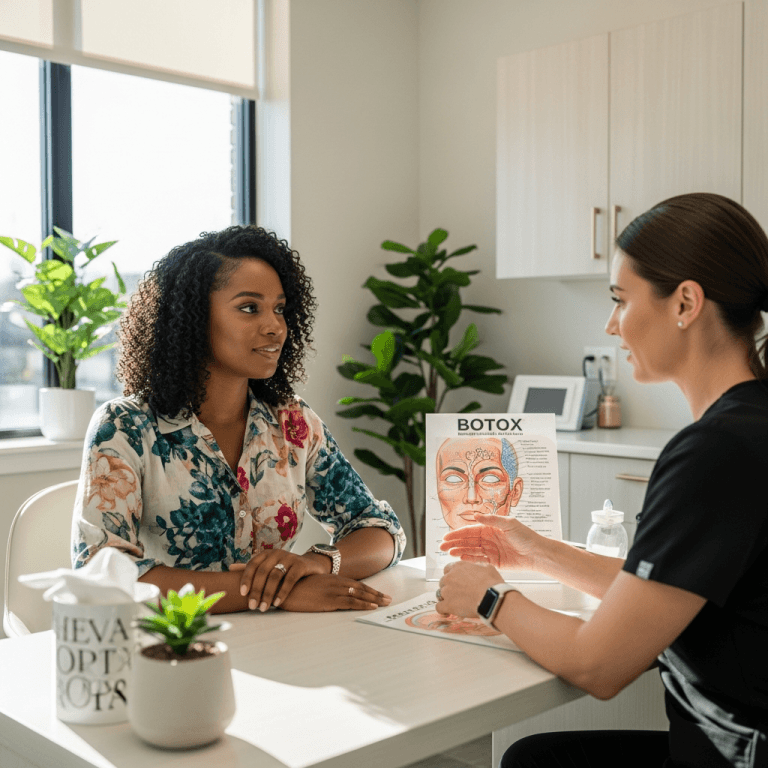
Here’s what most clinics won’t tell you upfront – a good practitioner will spend at least 30 minutes mapping your face before they even mention cost. They should be pulling your skin gently, asking you to make expressions, and explaining exactly which threads they’d use where. If someone rushes this part? Walk away.
Ask to see before-and-after photos of people with your skin type and age range. Not the cherry-picked Instagram shots, but real patients who look like you. And here’s a insider tip – request to see photos taken 6-12 months post-treatment. That’s when you’ll see how well the results actually hold up.
The Questions You Need to Ask (But Probably Won’t Think To)
“How many PDO thread procedures do you perform each month?” This matters more than years of experience. Someone doing 50+ procedures monthly has muscle memory that someone doing 5 simply doesn’t.
“What’s your complication rate, and how do you handle them?” Any practitioner who claims they’ve never had complications is either lying or hasn’t done enough procedures to encounter them. You want someone who’s honest about risks and has a clear protocol for managing problems.
And this one’s crucial – “Can I see the actual threads you’ll be using?” Some clinics use cheaper, lower-quality threads to boost their margins. Korean and European threads tend to be higher quality than others, though they’ll cost more.
Timing Your Treatment Like a Pro
Don’t book your PDO threads right before a big event. I know it’s tempting – wedding in three weeks, reunion next month – but here’s the reality check you need. You’ll likely have some swelling and possibly bruising for 5-7 days. Sometimes longer if you’re prone to inflammation.
The sweet spot? Schedule your treatment 6-8 weeks before any important events. This gives you time to heal completely and assess whether you want any touch-ups. Plus, if something goes wrong (rare, but possible), you’re not panicking three days before your daughter’s wedding.
Pre-Treatment Prep That Actually Matters
Skip the fish oil, vitamin E, and any anti-inflammatory supplements for a week before treatment. Yes, even if your doctor didn’t mention this – many don’t, but these can increase bleeding and bruising risk significantly.
Here’s something most people miss – stay extra hydrated for 3-4 days before your appointment. Well-hydrated skin responds better to treatment and heals faster. We’re talking at least 8-10 glasses of water daily, not just your usual coffee-and-maybe-some-water routine.
And please, please don’t get any other facial treatments for at least two weeks prior. No microneedling, no aggressive peels, no dermaplaning. Your skin needs to be in its baseline state, not recovering from other procedures.
The Recovery Reality Check
You’re going to want to touch your face constantly for the first few days. Don’t. I mean it – keep your hands away. The threads need time to settle, and prodding at every little bump or irregularity won’t help anything.
Sleep elevated for the first three nights – think airplane pillow or extra pillows behind your back. Lying completely flat can increase swelling and make you look puffier than necessary. Some people even sleep in a recliner the first night.
Ice is your friend, but use it smartly. Ten minutes on, twenty minutes off. Never apply ice directly to skin – wrap it in a thin cloth. Too much icing can actually interfere with the healing process that helps threads integrate with your tissue.
Red Flags During Recovery
A little asymmetry in the first week? Normal. One side always heals differently than the other. But if you’re seeing significant pulling, dimpling, or thread visibility after two weeks, call your practitioner. Don’t wait and hope it’ll resolve on its own.
Persistent pain beyond day 3-4 isn’t typical. Some discomfort? Sure. But actual pain that interferes with your daily activities needs attention.
Maximizing Your Investment
Here’s what the marketing materials don’t tell you – your results will be better if you maintain a consistent skincare routine afterward. The threads provide structure, but healthy skin makes everything look better.
Consider spacing out additional treatments rather than trying to do everything at once. Many people get better, more natural-looking results with smaller sessions spaced 6-8 months apart rather than one aggressive session.
And honestly? Take photos throughout your recovery – even the not-so-pretty swollen days. You’ll forget how much improvement you’ve actually achieved, and having that visual record helps you make informed decisions about future treatments.
The Reality Check Nobody Talks About
Here’s what they don’t mention in those glossy before-and-after photos: PDO threads aren’t always smooth sailing. Sure, the procedure itself is relatively quick – usually under an hour – but the aftermath? That’s where things can get… interesting.
The biggest shock for most people isn’t the procedure itself (though those first few needle pricks can be surprising). It’s waking up the next morning looking like they went ten rounds with a particularly aggressive pillow. We’re talking swelling, bruising, and sometimes a face that feels tighter than a new pair of shoes.
Sarah, one of our patients, put it perfectly: “I looked like a chipmunk who’d been storing nuts for the apocalypse.” Not exactly the glowing results she’d envisioned for her daughter’s wedding photos three days later.
When Your Face Feels Like It Belongs to Someone Else
The weirdness factor is real – and it’s temporary, but still… real. Your face might feel stiff or slightly numb in spots. Some people describe it as wearing an invisible mask that’s just a touch too tight. You might catch yourself in the mirror and think, “Is that really me?”
This is completely normal, by the way. The threads are doing their job, creating new collagen scaffolding under your skin. Think of it like renovating your house while you’re still living in it – there’s going to be some disruption.
The solution? Give yourself time to adjust. Most people start feeling like themselves again within a week or two. Ice packs become your best friend (15 minutes on, 15 minutes off). And seriously – book some downtime. This isn’t the week to schedule back-to-back Zoom calls or your high school reunion.
The Bruising Blues
Let’s be honest about bruising – it happens. Not to everyone, not every time, but often enough that you should plan for it. Some people bruise like peaches, others barely show a mark. You won’t know which category you fall into until… well, until you do.
The frustrating part? Concealer only goes so far when you’re dealing with swelling too. You might find yourself becoming very creative with scarves and strategic lighting for video calls.
Here’s what actually helps: Arnica gel (start using it a few days before your appointment), sleeping with your head elevated, and avoiding blood thinners like aspirin or that glass of wine you’re craving. Oh, and if you’re planning this around a big event – give yourself at least two weeks of buffer time. Trust me on this one.
The Asymmetry Anxiety
This one really gets people worked up – and understandably so. You might notice that one side looks different from the other in those first few days. Maybe your left cheek seems more lifted, or there’s more swelling on the right side.
Before you panic (easier said than done, I know), remember that faces aren’t naturally symmetrical anyway. Plus, swelling and healing happen at their own pace. What looks uneven on day three often balances out by week two.
When to worry? If significant asymmetry persists beyond the initial healing period, that’s when you should reach out to your provider. But in those first couple of weeks? Try to resist the urge to measure everything with a ruler at 6 AM.
Managing the “Did I Make a Mistake?” Moments
Around day two or three, almost everyone has The Moment. You know – when you look in the mirror and think, “What have I done?” Your face feels foreign, you’re swollen, maybe there’s some bruising, and you’re wondering if you should have just stuck with a really good moisturizer.
This is so normal we should probably put it on a welcome pamphlet. The thing is, PDO threads work gradually. You’re not going to wake up looking like a filtered version of yourself. The real magic happens over the following months as your skin produces new collagen.
Keep photos – not for social media, but for yourself. Week one photos compared to month three photos? That’s where you’ll see the difference. And remember, if you’re feeling anxious, your provider should be available to talk through your concerns. That’s part of what you’re paying for.
Setting Realistic Expectations (The Unsexy Truth)
PDO threads aren’t magic – they’re medicine. They can provide a subtle lift, improve skin texture, and give you that “I slept really well” look. But if you’re expecting dramatic, facelift-level results… well, that’s not what these are designed for.
The best candidates understand this going in. They want enhancement, not transformation.
What Actually Happens After Your PDO Thread Appointment
Let’s be honest – you’re probably wondering what you’ve gotten yourself into, right? I get it. You’ve made the decision, maybe even scheduled the appointment, but now you’re second-guessing everything. Will it hurt? How long until you see results? And please tell me you won’t look like you went ten rounds with a boxing glove…
First things first: you’re going to be swollen. Not “oh, I look a little puffy” swollen – more like “did I have dental work?” swollen. This is completely normal and actually a good sign that your body is responding to the treatment. Most people see the worst of it in the first 48-72 hours, then things start calming down.
The timeline goes something like this: immediate swelling (think chipmunk cheeks), some bruising that peaks around day 3-4, and then… patience. Lots of patience.
The Waiting Game – And Why It’s Worth It
Here’s where things get interesting – and where most people get a little antsy. You might actually look *worse* before you look better. I know, I know, that’s not what you want to hear when you’ve just dropped a decent chunk of change on your face.
But here’s what’s happening under the surface: those threads are doing their job, creating tiny areas of controlled inflammation that signal your body to start producing new collagen. It’s like renovation work – things look messy while the construction crew is doing their thing.
You’ll probably start noticing subtle improvements around the 2-3 week mark. Nothing dramatic yet, just… something. Maybe your skin feels a bit firmer, or that jowl line isn’t quite as pronounced when you look in the mirror.
The real magic happens between 6-8 weeks when collagen production really ramps up. This isn’t instant gratification – it’s more like watching a plant grow. Slow, steady, and then one day you wake up and think, “Huh, I actually look pretty good.”
Managing Your Expectations (The Reality Check You Need)
PDO threads aren’t going to turn back the clock 20 years. They’re not a facelift, and they’re definitely not magic. What they *will* do is give you a subtle lift, improve skin texture, and help restore some of that firmness you’ve been missing.
Think of it as the difference between a full kitchen renovation and just replacing the cabinet hardware. Both make a difference, but one is way more dramatic (and expensive) than the other.
Some people see amazing results that last 12-18 months. Others? Maybe 8-10 months before they’re ready for a touch-up. It depends on your skin, your age, your lifestyle… honestly, there are so many variables that your results might be completely different from your friend’s.
The Next Few Weeks – Your Action Plan
Sleep on your back for at least a week. Yeah, I know, it’s torture if you’re a side sleeper, but trust me on this one. You don’t want those threads shifting around while everything’s settling in.
No intense workouts for about a week – and by intense, I mean anything that gets your heart rate way up or involves lots of bouncing around. A gentle walk? Fine. Hot yoga class? Maybe wait a bit.
You’ll probably want to avoid facial massages or aggressive skincare treatments for a few weeks too. Your skin needs time to heal and adjust. This isn’t the time to try that new retinol serum or book a deep tissue facial massage.
When to Check In – And When to Worry
Most practices will want to see you for a follow-up around the 2-week mark, just to make sure everything’s healing nicely. This is normal – not a sign that something’s wrong.
What’s *not* normal? Severe pain that doesn’t improve, signs of infection (think fever, unusual warmth, or concerning drainage), or any threads that seem to be poking through the skin. If anything feels really off, don’t wait for your scheduled follow-up.
Looking Ahead – The Maintenance Reality
Here’s the thing about PDO threads – they’re not a one-and-done situation for most people. Think of them more like highlights for your hair or regular dental cleanings. Maintenance is part of the deal.
Some people love the results so much they become regulars, coming in every 12-15 months for touch-ups. Others try it once, appreciate what it did, but decide it’s not worth the ongoing investment. Both approaches are totally valid.
The key is going in with realistic expectations and understanding that this is just one tool in the anti-aging toolkit – not a miracle cure.
You know, it’s pretty amazing when you think about it – we’re living in this incredible time where looking and feeling your best doesn’t have to mean going under the knife or taking weeks off work. PDO threads really represent something special in that regard… they’re this perfect middle ground between doing nothing and doing everything.
I’ve watched so many people light up when they realize they don’t have to choose between “aging gracefully” (whatever that means) and major surgery. There’s this whole spectrum of options now, and threads sit right in that sweet spot where you get real results without the drama. It’s like finally finding that perfect pair of jeans – not too little, not too much, just right.
What really gets me excited about this whole trend is how it’s changing conversations about self-care. We’re moving away from this idea that wanting to look good somehow makes you vain or shallow. Taking care of yourself – whether that’s through exercise, good skincare, or yes, even cosmetic treatments – is just… well, it’s taking care of yourself. And that’s always a good thing.
The confidence boost alone is worth talking about. You know that feeling when you catch a glimpse of yourself in a mirror and actually smile instead of immediately cataloging everything you want to fix? That’s what I hear about most from people who’ve had threads done. It’s not about becoming someone else – it’s about looking like the best version of who you already are.
And here’s something I really appreciate about threads… they grow with you. As your skin continues to produce collagen over the months following treatment, the results actually improve. It’s like planting a garden and watching it flourish. Pretty cool, right?
Look, I get it if you’re feeling overwhelmed by all the information out there. The cosmetic treatment world can feel like drinking from a fire hose sometimes – so many options, so many opinions, so many before-and-after photos that might or might not be realistic. It’s normal to feel a little uncertain about what’s right for you.
That’s exactly why we’re here, though. Every person who walks through our doors brings their own unique concerns, goals, and – let’s be honest – anxieties about treatments. We’ve seen it all, and more importantly, we get it. There’s no such thing as a silly question when it comes to your face and your confidence.
Whether you’re curious about threads specifically or just want to explore what options might work for your particular situation, we’d love to have that conversation with you. Sometimes just talking through your concerns with someone who understands the science behind these treatments can make everything feel so much clearer.
You don’t have to figure this out alone, and you definitely don’t have to settle for feeling less than amazing about how you look. Give us a call or stop by for a consultation – no pressure, no sales pitch, just honest answers to your questions and a genuine assessment of what might work best for you. Because you deserve to feel as confident on the outside as you are on the inside.