
Acne Scarring
Rolling and boxcar scars respond to controlled micro-injury plus growth factors better than to almost anything topical. Improvement is gradual and builds across a series.

Microneedling with platelet-rich plasma drawn from your own blood — the treatment often called a "vampire facial." It's used to soften acne scarring, refine texture and enlarged pores, and restore the kind of glow that skincare alone can't reach. Performed as a medical procedure, physician-supervised, with blood drawn and processed on-site.
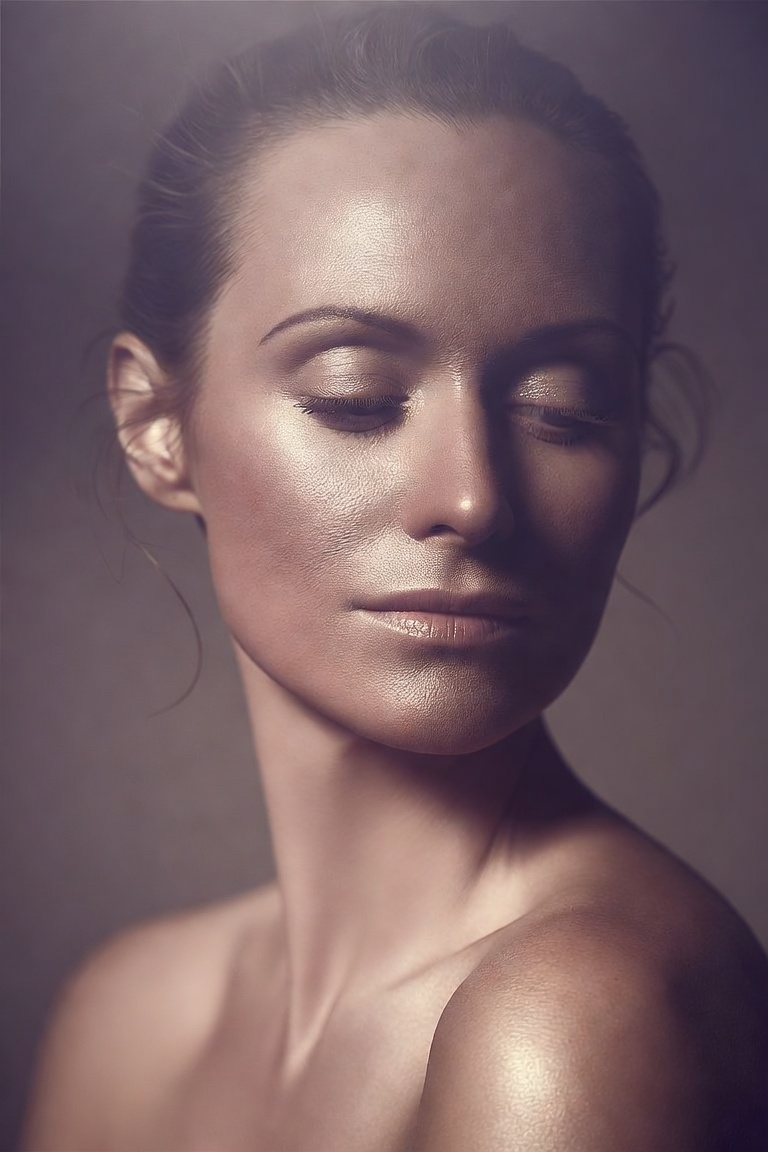
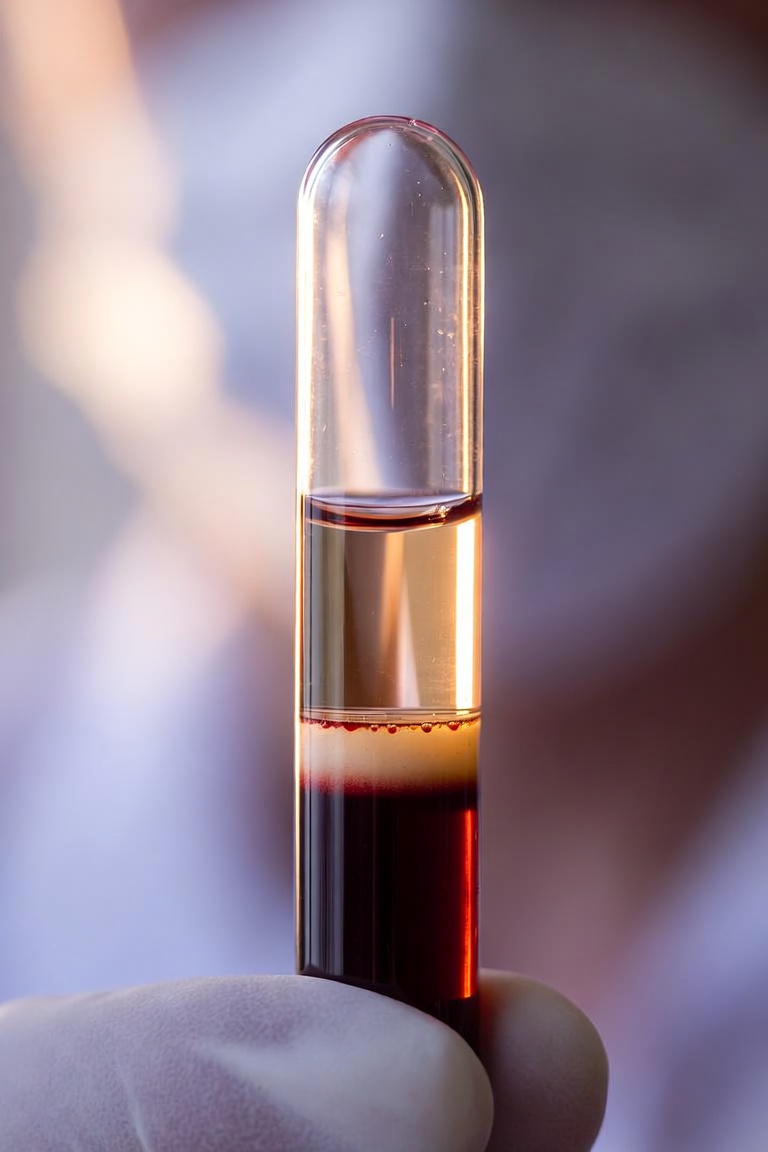
A PRP facial is microneedling performed with platelet-rich plasma made from your own blood. We draw a small sample, spin it in a centrifuge to concentrate the platelets, and apply that plasma to your skin while a sterile microneedling device creates thousands of controlled micro-channels — so the growth factors go into the skin rather than sitting on top of it.
The logic is simple: platelets are what your body already sends to a healing site. Concentrating them and delivering them into freshly created micro-channels amplifies the repair response that microneedling triggers on its own. Results build over the following weeks as collagen remodels — this isn't a same-day glow, it's a rebuild.
You may know it by its nickname, the vampire facial. Same treatment, different marketing. What matters far more than the name is where and how it's performed — a point we take seriously.
At Chic Derm & Aesthetics in Allen, PRP facials are performed by Faseeha Raza, PA-C, a board-certified Physician Associate, under the supervision of Dr. Muhammad Raza, MD.
PRP facials work on skin quality — the texture, firmness and tone that make skin look healthy up close. They're a collagen treatment, not a pigment treatment or a volume treatment.
Rolling and boxcar scars respond to controlled micro-injury plus growth factors better than to almost anything topical. Improvement is gradual and builds across a series.
When skin feels uneven to the touch or pores look more prominent than they used to, remodeling the collagen underneath is what actually changes it.
For the early, textural lines that aren't caused by muscle movement — the kind Botox doesn't address because there's nothing to relax.
Thin, finely wrinkled under-eye skin is a common PRP target. Note that PRP improves skin quality here — hollowing is a volume problem and needs a different tool.
Skin that looks flat rather than damaged. PRP restores the light-reflecting quality that comes from healthy, well-organized collagen.
For patients who don't want injectables yet but want to invest in the skin itself — a maintenance treatment rather than a correction.
What a PRP facial is not for: pigment problems like melasma, sun spots and uneven tone are better addressed with laser resurfacing — see MOXI® laser. Lost volume needs filler, not PRP. And PRP for thinning hair is a separate scalp treatment with a different protocol — see hair loss treatment. We'll tell you plainly at your consult if a different treatment fits your goal better.
PRP facials are most often performed on the face, and can also treat the neck, décolletage, under-eyes and backs of the hands. Individual results vary. Candidacy, expected outcomes and the number of sessions are determined at your consultation.
This is the question we get most. The needling portion is identical — SkinPen® microneedling is an excellent treatment on its own. Adding PRP delivers a concentrate of your own growth factors into the channels the needling creates.
A practical way to decide: if you're treating scarring or a stubborn texture problem, PRP is worth the difference. If you're doing routine maintenance, standard microneedling does the job well. Some patients alternate. If you want deeper collagen stimulation with radiofrequency energy added, RF microneedling is a third option we'll walk you through.
About seventy-five minutes start to finish, with a recovery you can plan around a normal week.
We review your skin, your goals, your medical history and current medications, and confirm PRP is the right tool — or recommend a better one.
A small sample is drawn, exactly like a routine lab draw, using sterile single-use supplies opened in front of you.
Topical numbing goes on while your sample spins in the centrifuge, separating the platelet-rich plasma from the rest.
Your plasma is applied as a sterile, single-use microneedling cartridge passes over the treatment area, driving it into the micro-channels.
Flushed and warm, similar to a mild sunburn, sometimes with slight swelling. Gentle cleanser, no actives, and diligent sun protection.
Texture and tone improve as collagen remodels. A series of three treatments four to six weeks apart is the standard plan, then maintenance.
Timelines are typical ranges, not guarantees — recovery and results vary by individual, the depth used and the concern being treated. Your provider gives you personalized pre- and post-care instructions, including which skincare actives to pause and for how long.
PRP involves drawing, handling and re-applying blood. That is a medical procedure, and it belongs in a medical setting — not a pop-up, a hotel suite or an unlicensed studio. Public health investigations have documented serious infections traced to PRP performed without proper sterile technique.
Your blood never leaves the clinic. It's drawn, spun and applied in one visit by the same licensed provider.
Needles, tubes, cartridges and PRP kits are single-use and disposed of after your treatment. Nothing is re-used between patients, ever.
Performed by a board-certified Physician Associate under the supervision of a licensed physician — not a technician working unsupervised.
Certain blood disorders, clotting conditions, active skin infections, some medications and pregnancy can make PRP inappropriate. We review that before you book, not after.
Questions worth asking any provider before a PRP facial: Who draws the blood, and are they licensed to? Is the centrifuge on-site? Are the cartridges single-use? Who is the supervising physician? We're happy to answer all four.
PRP facials are priced per treatment, and because a series of three is typically recommended, package pricing is usually the better value. You'll have clear pricing before anything begins.
Priced by the areas treated — face alone, or face with neck, décolletage or under-eyes.
Since most plans call for three sessions four to six weeks apart, package pricing lowers your per-treatment cost. See the price menu →
This is general information, not a quote. Call 469-466-2727 for current pricing.
Your blood draw, your plasma and your treatment are handled by a board-certified Physician Associate under the direction of Dr. Muhammad Raza, MD.

Faseeha Raza is a board-certified and licensed Physician Associate practicing Dermatology and Facial Aesthetics. She performs the draw, processing and treatment herself — the same provider start to finish — and will tell you directly when a different treatment would serve your goal better. She serves as Chair of the SDPA Distance CME Committee.
Book with Faseeha →
Dr. Muhammad Raza is an Internal Medicine, Pulmonary, Critical Care and Sleep Medicine board-certified physician practicing since 2002. As Medical Director, he establishes and oversees the clinical protocols, sterile technique and safety standards behind every PRP and aesthetic treatment performed here.
More about our team →Medically reviewed by Dr. Muhammad Raza, MD · Last reviewed August 2026. This page is general education, not medical advice. PRP treatment requires evaluation by a licensed provider; candidacy, results and recovery vary by individual.
Our Allen clinic sits just off Highway 75 on West Exchange Parkway — a short drive from Frisco, Plano, McKinney and the rest of Collin County.
Exploring your options? See our med spa in Allen · SkinPen® microneedling · MOXI® laser
"I have been a client for the past few months now and Faseeha is truly gifted. I've never had an aesthetician that made me feel so cared for…"
"My results were amazing. She educated me throughout the process and made me feel comfortable every step of the way…"
"She made me feel incredibly comfortable and walked me through every step of the treatment…"
Note: swap in a PRP- or microneedling-specific Google review when one is available.
A PRP facial combines microneedling with platelet-rich plasma made from your own blood. A small sample is drawn and spun in a centrifuge to concentrate the platelets, then that plasma is applied to the skin while a sterile microneedling device creates micro-channels so it can absorb. The growth factors in your platelets support the skin's natural repair response, improving texture, tone and the appearance of acne scarring over several weeks.
Yes — "vampire facial" is a nickname for microneedling with platelet-rich plasma, named for how the plasma looks during treatment. At Chic Derm it's performed as a medical procedure: blood drawn and processed on-site with sterile, single-use supplies, in a physician-supervised clinical setting. More on our safety standards →
The microneedling portion is the same — controlled micro-channels that trigger collagen production. Adding PRP delivers a concentrate of your own growth factors into those channels, which many patients find enhances the result and can shorten how long skin stays red. Microneedling alone remains an excellent standalone treatment; PRP is the upgrade for acne scarring, crepey texture and overall skin quality.
A series of three treatments spaced roughly four to six weeks apart is commonly recommended, with maintenance once or twice a year afterward. Deeper acne scarring may call for more sessions. Your provider sets the plan at your consultation based on what you're treating.
Most patients look flushed — similar to a mild sunburn — for about 24 to 48 hours, sometimes with mild swelling or pinpoint dryness. Makeup is usually fine the next day. Strict sun protection and gentle skincare matter during the first week.
Topical numbing is applied for about 30 minutes beforehand, so most patients describe it as tolerable — a light scratching or vibrating sensation. The blood draw itself feels like a routine lab draw.
PRP facials are priced per treatment, and because a series of three is typically recommended, package pricing usually lowers the per-treatment cost. Pricing depends on the areas treated. We give you clear pricing at your consultation, plus membership savings and CareCredit & Cherry financing. Call 469-466-2727.
Because PRP is made from your own blood, allergic reaction to the plasma itself isn't a concern. Safety depends almost entirely on the setting: blood must be drawn, processed and applied using sterile, single-use supplies by a trained, licensed provider, never re-used between patients. Chic Derm performs PRP as a physician-supervised medical procedure. Candidacy is reviewed first — certain blood disorders, active infections, some medications and pregnancy may make PRP inappropriate.
Yes. PRP injections into the scalp are a separate treatment for thinning hair, with a different protocol, injection technique and treatment series than a facial. See our hair loss treatment page for how PRP for hair works.
Chic Derm & Aesthetics performs PRP facials at 1312 W Exchange Pkwy, Suite 2130, Allen, TX 75013 — just off Highway 75, a short drive from Frisco, Plano, McKinney, Wylie, Parker and Fairview.
Book a complimentary consultation in Allen and we'll assess your skin, confirm you're a candidate for PRP, and build a plan — with honest expectations about results, recovery and how many sessions it will take.
On West Exchange Parkway, minutes from Highway 75 — convenient from Frisco, Plano, McKinney and across Collin County.