The Truth About Botox: Can It Cause Cancer?
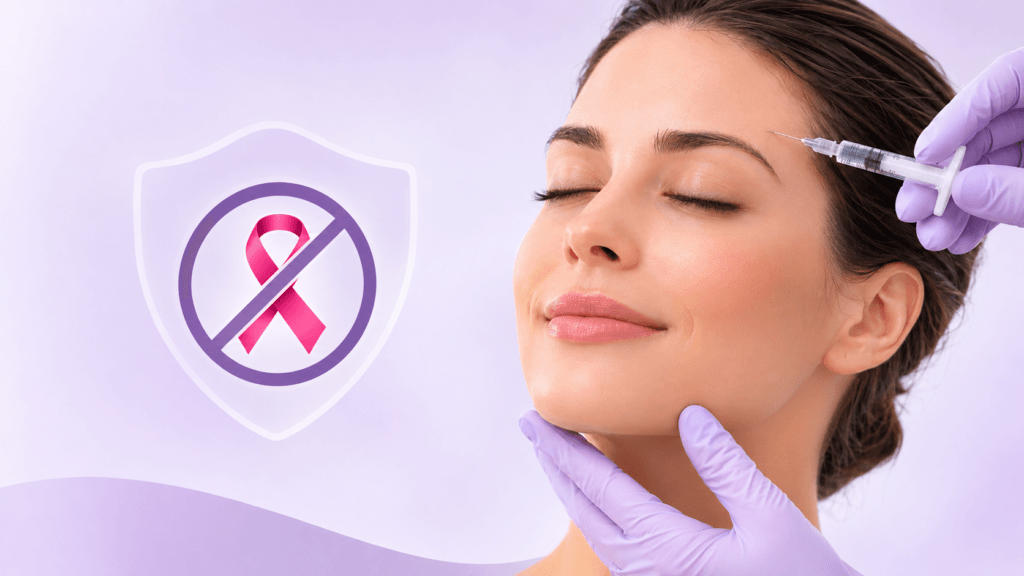
Botox is a popular non-surgical cosmetic treatment, but many people ask: Does Botox cause cancer? The answer from the available medical evidence is reassuring: approved Botox injections have not been shown to cause cancer. Our review of clinical research and the FDA-approved prescribing information found no evidence that Botox is a cancer-causing treatment. This article explains what the research tells us, what the FDA testing shows, and which Botox risks patients should actually know about.
Botox is used to soften forehead lines, frown lines and crow's feet. Botulinum toxin injections are also used for certain medical conditions, including chronic migraines and excessive sweating.
So, does Botox cause cancer? No. Current medical evidence has not shown that approved Botox injections cause cancer. The FDA-approved prescribing information also reports that Botox Cosmetic tested negative in several genetic toxicology tests.
In this article, we explain the evidence in plain language, including what is known about cancer risk, DNA testing, long-term use and the side effects that are actually associated with Botox.
Quick Answer: Can Botox Cause Cancer?
No. Approved Botox injections have not been shown to cause cancer. Available clinical evidence has not identified Botox as a cancer-causing treatment. FDA testing also found no evidence of genetic damage in the tests performed. As with any medical treatment, patients should understand its known risks and follow the advice of a qualified healthcare professional.
What Is Botox and How Does It Work?
Botox is a brand name for onabotulinumtoxinA, a purified form of botulinum toxin type A. This substance originates from the bacterium Clostridium botulinum, which produces a toxin responsible for botulism when exposure occurs under harmful conditions.
However, the medically prepared product used for injections is different from exposure to the unprocessed toxin. Approved products are manufactured and controlled for specific medical uses and administered in carefully measured doses.
Botox works by temporarily blocking certain chemical signals that nerves send to muscles. When these signals are interrupted, the targeted muscles relax rather than contracting as strongly as before.
This temporary relaxation can soften wrinkles caused by repeated facial movements, including:
- Forehead lines.
- Frown lines between the eyebrows.
- Crow's feet around the eyes.
Botulinum toxin injections also have medical applications. Depending on the product and approved indication, they may be used to treat chronic migraines, excessive sweating, certain muscle spasms and other conditions.
Learn more in the Cleveland Clinic's overview of Botox injections .
Does Botox Cause Cancer? What Does the Research Say?
No. Current medical evidence does not show that approved Botox injections cause cancer. Botox is not identified as a cancer-causing treatment in the available evidence reviewed for this article.
Botox has been used in medical practice for decades. The research and regulatory information discussed below do not show that cosmetic Botox injections cause cancer. The important point for patients is that there is no established evidence linking approved Botox injections to cancer.
Cancer develops through changes that allow abnormal cells to grow and divide uncontrollably. These changes can involve genetic alterations, environmental exposures, inherited factors and other biological processes.
Botox, on the other hand, is designed to act on nerve signaling and temporarily reduce muscle activity. Its established mechanism of action is different from the processes involved in cancer development.
The FDA-approved prescribing information for Botox Cosmetic reports that the product tested negative in a series of genetic toxicology tests, including tests involving gene mutations and chromosomal abnormalities.
The FDA label also states that long-term animal studies have not been performed specifically to evaluate the product's carcinogenic potential. This is a limitation in the available testing; it is not evidence that Botox causes cancer. The overall findings reported in the label do not show genetic damage in the tests performed.
What does this mean for patients? The available evidence does not show that approved cosmetic Botox injections cause cancer. The FDA's genetic toxicology results are reassuring, while the absence of long-term animal carcinogenicity studies should be understood as a research limitation—not as proof of a cancer risk.
Does Botox Increase the Risk of Skin Cancer?
Another common concern is whether Botox injections can increase the risk of developing skin cancer.
Botox is commonly injected into specific facial muscles to reduce the appearance of expression-related wrinkles. Its primary action involves nerve-to-muscle communication rather than directly treating or altering skin cells.
Skin cancer, meanwhile, is associated with factors such as ultraviolet radiation exposure, certain genetic characteristics, immune status and other environmental influences.
Current evidence has not shown that cosmetic Botox injections increase the risk of skin cancer. Botox is not a substitute for sun protection, skin checks or appropriate dermatologic care.
However, Botox should never be considered a substitute for sun protection or regular skin examinations.
Simple Ways to Protect Your Skin
- Apply broad-spectrum sunscreen with SPF 30 or higher.
- Limit excessive exposure to direct sunlight.
- Avoid indoor tanning.
- Monitor changes in existing moles or the appearance of new skin lesions.
- Schedule a professional skin examination when appropriate.
If you notice a suspicious skin change, consult a dermatologist rather than assuming it is related to a previous cosmetic treatment.
Does Botox Affect Your DNA or Cause Genetic Mutations?
The concern that Botox might cause cancer is sometimes connected to questions about DNA damage and genetic mutations.
DNA contains the instructions that help regulate how cells function, grow and divide. Certain genetic changes can contribute to cancer development.
Botox works through a different biological pathway. It temporarily interferes with the release of acetylcholine, a chemical messenger involved in muscle contraction.
The FDA prescribing information reports that Botox Cosmetic tested negative in several genetic toxicology assays, including tests for gene mutations and chromosomal abnormalities.
This is useful evidence when discussing genetic safety. However, it should not be interpreted as proof that every possible biological effect has been investigated.
The available evidence does not show that approved cosmetic Botox injections cause DNA mutations that lead to cancer. The FDA's negative genetic toxicology test results support this conclusion, although no single set of tests can answer every possible long-term research question.
Is Botox Safe for Long-Term Use?
Many people do not receive Botox just once. They return for treatments every few months to maintain their results. Naturally, this raises another question: Is Botox safe if you use it regularly for several years?
Mayo Clinic's September 2016 Q&A on Botox safety discussed the treatment's safety experience. The article described a reassuring safety profile based on the evidence available at that time. It is useful background on Botox safety, although it is not a cancer-specific study.
Mayo Clinic explained that Botox treatment can be discontinued without making wrinkles worse than they were before treatment began.
Its more recent Botox injections guide , updated in November 2024, explains how the treatment works, its medical applications, possible complications and recommended precautions.
According to Mayo Clinic, Botox effects generally last around three to four months, although the duration depends on the condition being treated and individual response.
When someone stops receiving injections, muscle movement gradually returns and expression lines may become visible again. This does not mean Botox has accelerated the aging process.
Nevertheless, long-term safety should be considered individually. Treatment history, dosage, injection frequency, medical conditions and other medications can all matter.
Rather than automatically scheduling repeat treatments, discuss the appropriate dose and interval with your healthcare provider.
What Are the Actual Risks and Side Effects of Botox?
Although the question of cancer receives considerable attention, patients should also understand the side effects and complications that are actually recognized with Botox treatment.
Common Temporary Effects
- Mild pain or tenderness at the injection site.
- Bruising, redness or swelling.
- Headache.
- Flu-like symptoms.
- Temporary drooping of the eyelids or eyebrows.
- Eye dryness or excessive tearing.
These effects are generally temporary, although their duration and severity can vary.
Less Common but More Serious Complications
In rare situations, botulinum toxin effects can spread beyond the intended treatment area. This may cause symptoms such as:
- General muscle weakness.
- Blurred or double vision.
- Difficulty speaking.
- Difficulty swallowing.
- Breathing problems.
Seek immediate medical attention if you experience difficulty breathing or swallowing, significant muscle weakness or other symptoms suggesting the toxin has spread beyond the injection area.
These complications are different from cancer concerns and should not be confused with them.
The Cleveland Clinic Botox guide and Mayo Clinic's Botox information provide additional information about treatment risks and warning signs.
Is Botox Safe for People Who Have Had Cancer?
People with a previous cancer diagnosis may have additional questions about cosmetic treatments.
It is important to distinguish between two different issues:
- Whether Botox causes cancer.
- Whether someone with a current or previous cancer diagnosis can safely receive Botox.
These are not the same question.
A 2025 systematic review published in Aesthetic Plastic Surgery, titled Aesthetic Medicine in Oncology: A Systematic Review of Botulinum Toxin, Dermal Fillers, Chemical Peels, and Laser Therapies in Cancer Patient , examined aesthetic treatments in oncology patients. It discussed the use of botulinum toxin for certain treatment-related concerns, including post-treatment deformities and quality-of-life considerations.
However, this review did not investigate whether Botox causes cancer or increases cancer recurrence.
If you have a history of cancer, are undergoing chemotherapy or radiation therapy, or are receiving other cancer treatments, discuss cosmetic injections with your oncologist and the healthcare professional performing the procedure.
Your treatment plan, immune status, medications and recovery needs may influence whether an elective procedure is appropriate.
How to Choose a Safe Botox Provider
Regardless of whether your concern is cancer, long-term effects or temporary side effects, choosing an appropriately qualified provider is an important part of treatment safety.
1. Verify the Provider's Qualifications
Choose a properly licensed healthcare professional who has appropriate training and experience with botulinum toxin injections.
2. Ask About the Product
Confirm that the product is FDA-approved, obtained through an authorized source and appropriate for your intended treatment.
3. Discuss Your Medical History
Tell your provider about medical conditions, previous Botox treatments, allergies and medications you take.
4. Understand the Treatment Plan
Ask about the recommended dose, injection areas, expected results, possible side effects and appropriate intervals between treatments.
5. Follow Professional Aftercare Instructions
Your provider should explain what to avoid after treatment and when to seek medical advice if unexpected symptoms develop.
Frequently Asked Questions About Botox and Cancer
Can Botox cause cancer?
No. Available medical evidence has not shown that approved Botox injections cause cancer. The FDA's genetic toxicology tests were negative for the types of genetic damage assessed.
Does Botox cause cancer after repeated treatments?
Current evidence has not shown that repeated cosmetic Botox treatments cause cancer. Follow your qualified healthcare professional's advice about dose and treatment intervals.
Is Botox cancer-causing?
No. Botox is not shown to be a cancer-causing treatment. It works by temporarily blocking nerve signals to targeted muscles, and FDA genetic toxicology tests for Botox Cosmetic were negative.
Will Botox cause cancer in the future?
Current evidence does not show that approved Botox injections cause cancer. As with all medical treatments, ongoing safety monitoring and research remain important.
Does Botox increase skin cancer risk?
Current evidence has not shown that cosmetic Botox injections increase skin cancer risk. Sun protection, avoiding tanning and routine skin checks remain important for skin cancer prevention.
What happens if I stop getting Botox?
When Botox wears off, the treated muscles gradually regain their normal movement. Expression lines may return to their previous appearance, but stopping treatment does not make your face more wrinkled than it would otherwise have been.
How long do Botox results last?
For cosmetic treatment, results commonly last around three to four months, although some people may experience shorter or longer effects. Your provider can recommend an appropriate treatment schedule.
Final Thoughts: Should You Be Worried About Botox and Cancer?
So, does Botox cause cancer? No. Available medical evidence has not shown that approved cosmetic Botox injections cause cancer.
The FDA-approved prescribing information reports that Botox Cosmetic tested negative in several genetic toxicology tests. The FDA label also notes that long-term animal studies have not been performed specifically to evaluate carcinogenic potential. That is a limitation in the research—not evidence that Botox causes cancer.
Botox is still a prescription treatment and is not risk-free. Possible side effects include bruising, headache and temporary eyelid drooping. Rarely, toxin effects can spread beyond the injection area and cause more serious symptoms. These are recognized treatment risks, but they are different from cancer.
Patients should make decisions using reliable medical information rather than alarming online claims. Choose a qualified provider, use an FDA-approved product from an authorized source, and discuss your health history before treatment.
If you are considering Botox, speak with a qualified healthcare professional about your medical history, treatment goals, appropriate dosage and possible side effects.
Your safety should always come before cosmetic results.References and Medical Sources
- Mayo Clinic (2016). Mayo Clinic Q and A: Botox for Wrinkles – Is It Safe?
- Mayo Clinic (2024). Botox Injections.
- Cleveland Clinic. Botulinum Toxin Injections.
- Barone et al. (2025). Aesthetic Medicine in Oncology: A Systematic Review of Botulinum Toxin, Dermal Fillers, Chemical Peels, and Laser Therapies in Cancer Patient. Aesthetic Plastic Surgery.
- U.S. Food and Drug Administration. FDA-Approved Botox Cosmetic Prescribing Information (Carcinogenesis and Genetic Toxicology).